Early Season Trout Fishing Tips – For rivers and streams – Fly, Lure & Bait
There’s something special about the opening weeks of the trout season in Wales!
After months of cold, high water and closed seasons, anglers return to the banks of iconic Welsh trout rivers with renewed optimism.
BUT early season trout fishing can be challenging. Water temperatures are often low, insect life is only just beginning to stir, and river levels are usually much higher than in summer.
Success at this time of year comes down to understanding conditions and adapting your approach…..
Here are our top early season trout fishing tips for Welsh rivers and streams.
1. Understand Early Season Conditions
In early spring, trout are still in a winter mindset. Cold water slows their metabolism, meaning they:
> Feed less frequently
> Hold in steadier, slower water
> Avoid expending unnecessary energy
After heavy winter rainfall, rivers can still be pushing through with extra colour.
Don’t be put off by slightly high or lightly tinted water. In fact, these conditions can make fish less wary and more confident to feed.
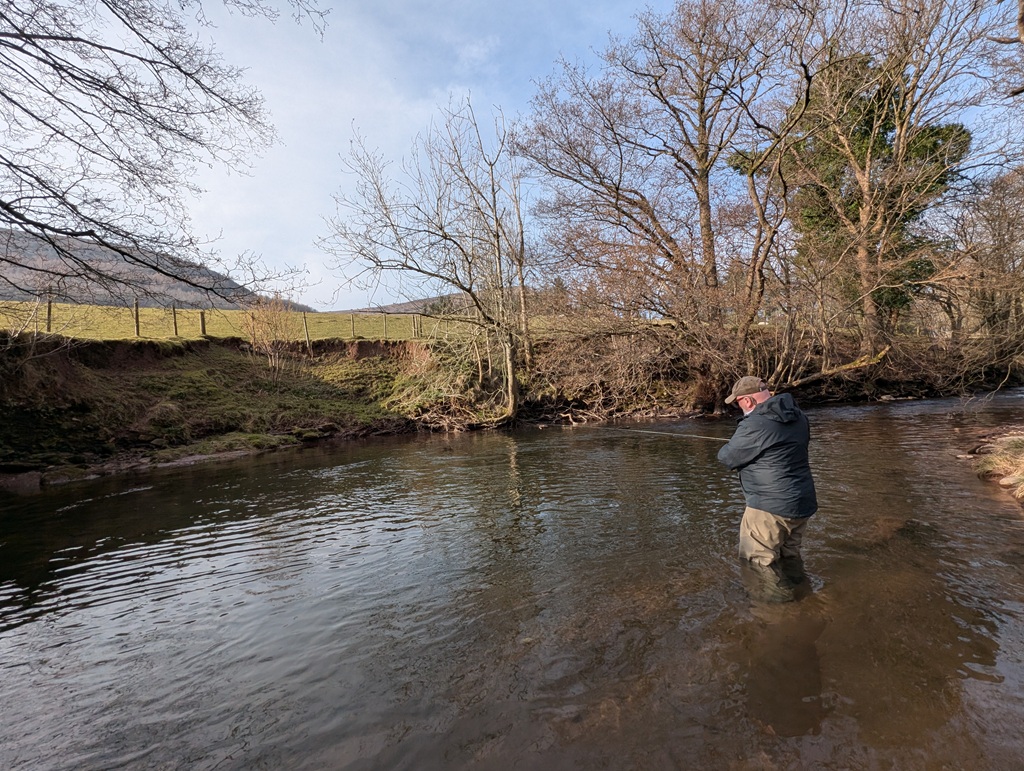
Focus on steadier glides, deeper pools, softer seams, and the inside of bends rather than in the fast riffles and racing pocket water.
2. Fish Later in the Day
Unlike summer, when early mornings and late evenings dominate, early season trout fishing is often best from late morning into mid-afternoon.
As the sun gets higher, it:
> Raises water temperature slightly
> Triggers early insect activity
> Encourages trout to move and feed
Even a couple of degrees rise in air and water temperature can make a noticeable difference to the fishing.
So time your session. e.g 11am to 3pm.
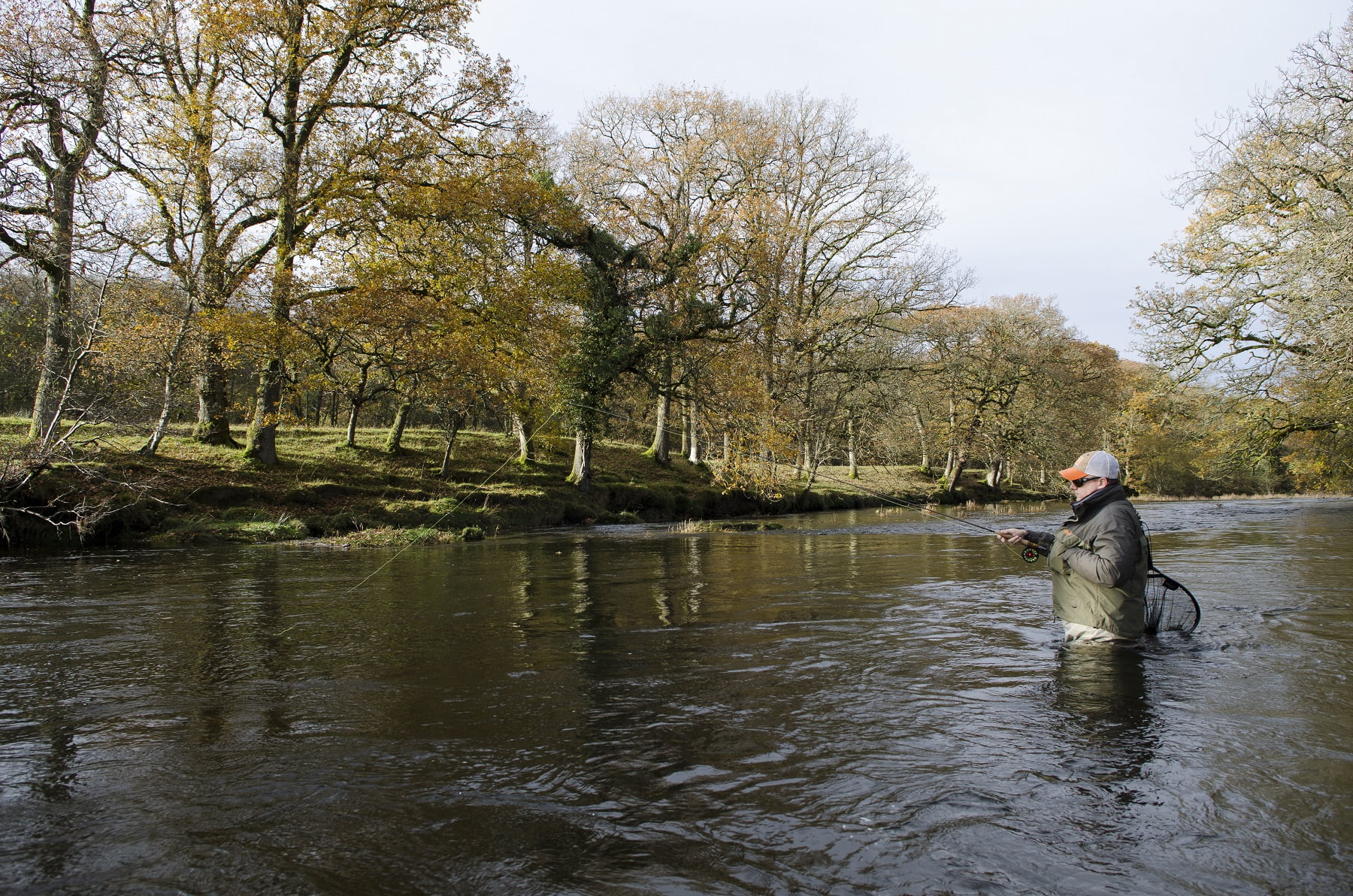
3. Fly Fishing – Start Subsurface
Very early in the season, surface hatches of fly can be sparse and unpredictable.
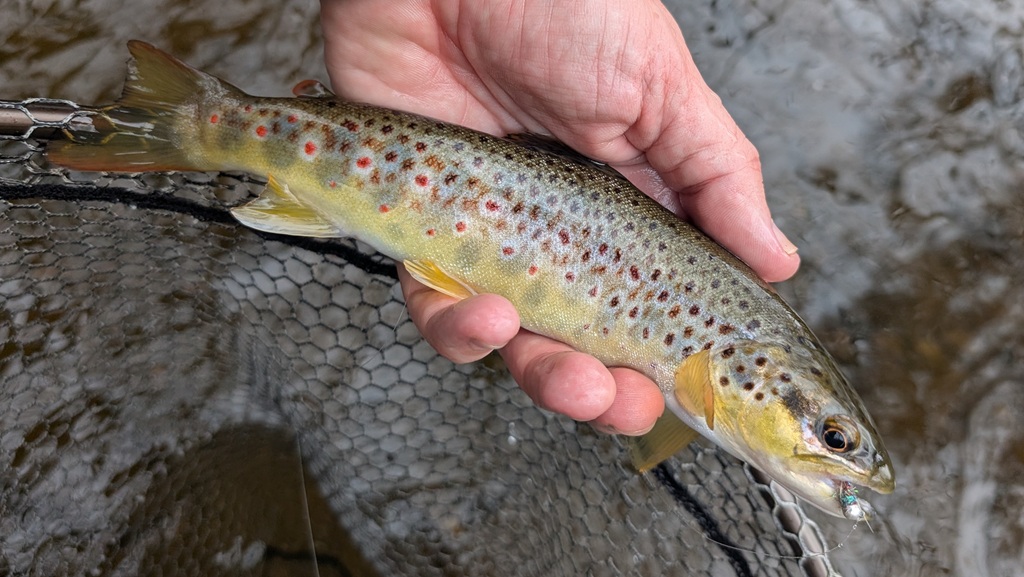
While you may see a few Large Dark Olives or March Browns on milder days, most feeding will be happening below the surface, on the ascending nymphs of these flies.
Learning how to fish nymphs effectively is important, either if Euro Nymphing, under an indicator or suspended under a large dry fly.
Effective early season sub-surface fly patterns (sizes 12 to 16) include:
> Hare’s Ear nymphs – With tungsten beads from 3mm to 4.6mm, silver is a great colour early season
> Pheasant Tail nymphs – With copper beads 2mm to 3.5mm for use as a dropper or in shallower water
> Jig Steamers – Small lures tied with tungsten beads on jig hooks, perfect for cloudy water
> Wets flies and spiders – For fishing just subsurface ‘down and across’ casting
4. Be ready For Dry Fly Opportunities
As spring weather improves on mild, overcast days with a gentle breeze, you may encounter more frequent early hatches of upwing flies – including Olives and March Browns.
When you do you may see rising fish, more often in the slower glides and pool tails.
When this happens, be ready, a hatch does not last long. Experienced anglers often carry a 2nd dry fly rod, so they can quickly change over from nymphs.
Carry a few of the following flies:
> Parachute Adams – Size 12 to 16
> CDC Olive patterns – Size 14 to 18
> March Brown dun and emerger imitations – Size 12 & 14
Early season dry fly fishing can be brief but memorable. It is often concentrated into a short window of activity for an hour or two usually at the warmest time of the day.
4. Earth Worm Fishing Tactics (Where Permitted)
On most Welsh trout rivers, worm fishing is allowed. But always check local byelaws, along with your permit and angling club rules before fishing with them.
Worm fishing is a good way to get beginners into the sport and a lot of angler started off with a humble earthworm fished on a cheap spinning outfit.
In early season conditions, worming tactics can be particularly effective, especially in higher or slightly coloured water, when trout feed on natural food washed downstream by a flood.
Key tips:
>Free-line a worm with a split shot, or fish with the current unweighted, to maintain a natural drift
>Target deeper runs, pool tails and inside bends with a small bomb weight
>Keep contact with the worm but avoid dragging it unnaturally
>Travel light and cover water steadily
In colder water, bites can be subtle. A slight check or tightening of the line may be your only indication. Always strike fast to avoid deep hooking and use barbless hooks.
Forceps or a coarse angling disgorger are essential when worming.
5. Artificial Lure and Spinner Fishing (Where Permitted)
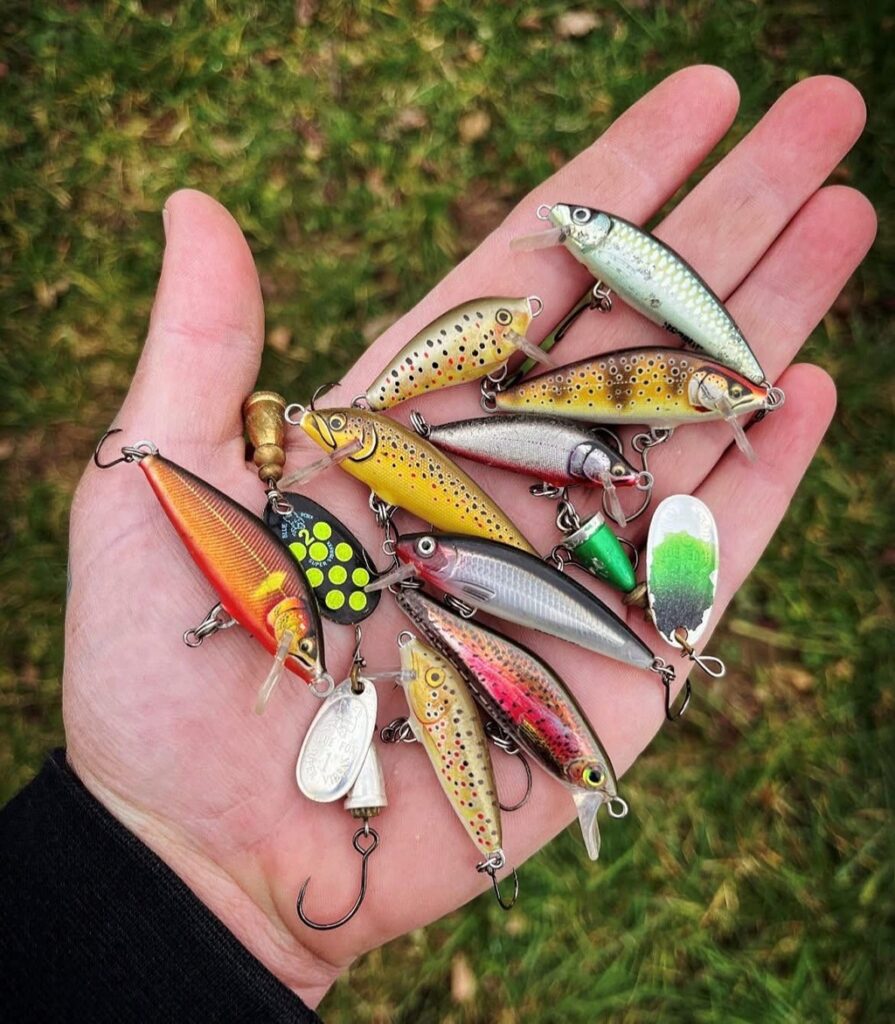
When rivers are pushing through early season, small spinners, crank-baits and lightweight soft plastic lures can help you search water efficiently, while triggering exciting strikes from often better sized fish.
Lures are allowed for trout on many rivers in Wales, but always check the NRW bylaws and with the angling clubs providing the ticket.
Some river systems (such as the Usk and all its tributaries) prohibit spinning by law, but on most others you are good to go, if the ticket provider allows.
Effective lure options include:
> Small silver or copper spinners – Mepps or Blue Fox are good brands, Size 0 / 1 / 2
> Flashy or fluorescent hard bodied crank-bait lures or plugs – e.g Rapala Countdown Elite 4.5cm & 5.5cm
> Jig head soft plastic shads and creature baits in dark colours, 5g to 10g, for prospecting deeper pools
Focus on:
> Crease lines
> Slower margins
> The tails of pools
> Tight to cover, such as logs and undercut banks
> Casting upriver and retrieving down towards you
When lure fishing please always de-barb your treble hooks – they quickly destroy trout mouths and will maim or kill salmon parr.
Even better, replace all of your lure hooks with single barbless hooks, for responsible C&R angling.
6. Safety First in Spring Conditions
Welsh rivers in early season can be powerful and unpredictable, particularly after winter rainfall in upland areas.
If you must wade in spring flows, apply the following guidance:
> Wear a wading belt and studded wading boot soles
> Use a wading staff where necessary
> Avoid crossing in heavy flow areas, choose shallow pool tails
> Check river levels and weather forecast before travelling – easy to to do with the NRW gauge service
Almost all rivers across Wales respond quickly to rain, so always fish within your limits and apply common sense.
On the other hand, a lot of them fall fast within 12 to 24 hours and the fishing on a falling spate river can often be good on a mild spring day.
7. Keep Expectations Realistic and Enjoy It!
Early season trout fishing is rarely about big numbers.
It’s about reconnecting with the river after winter, reading the water carefully, and working for each fish.
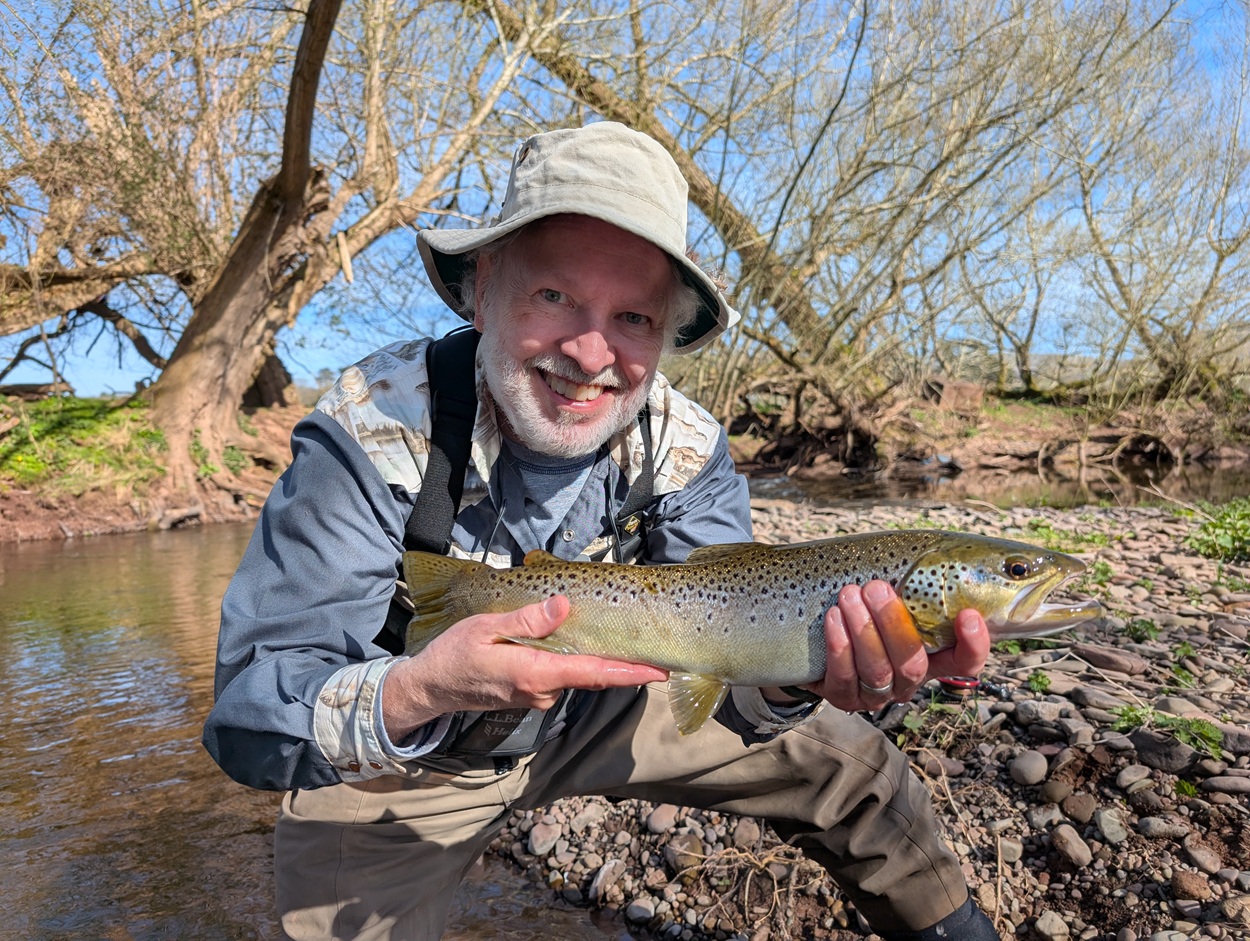
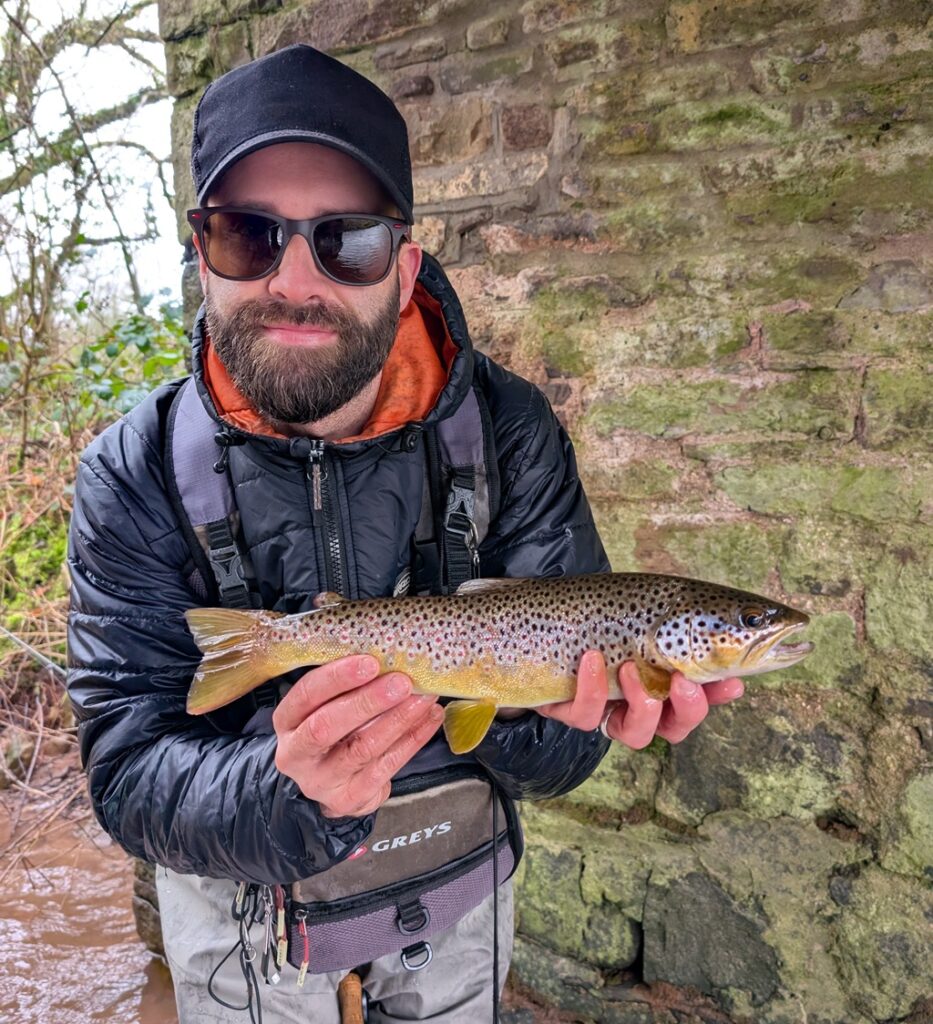
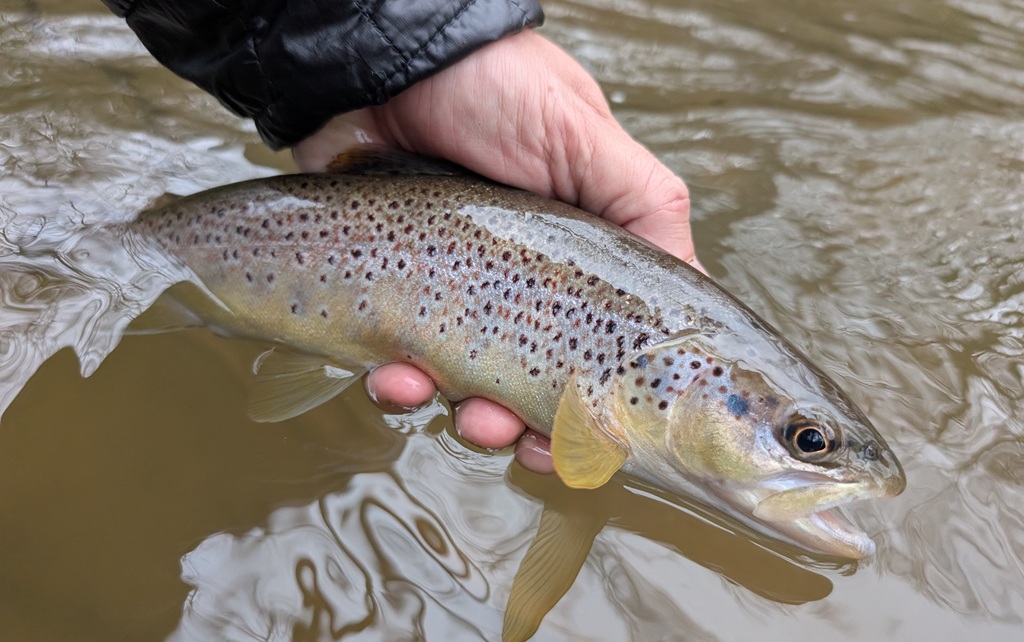
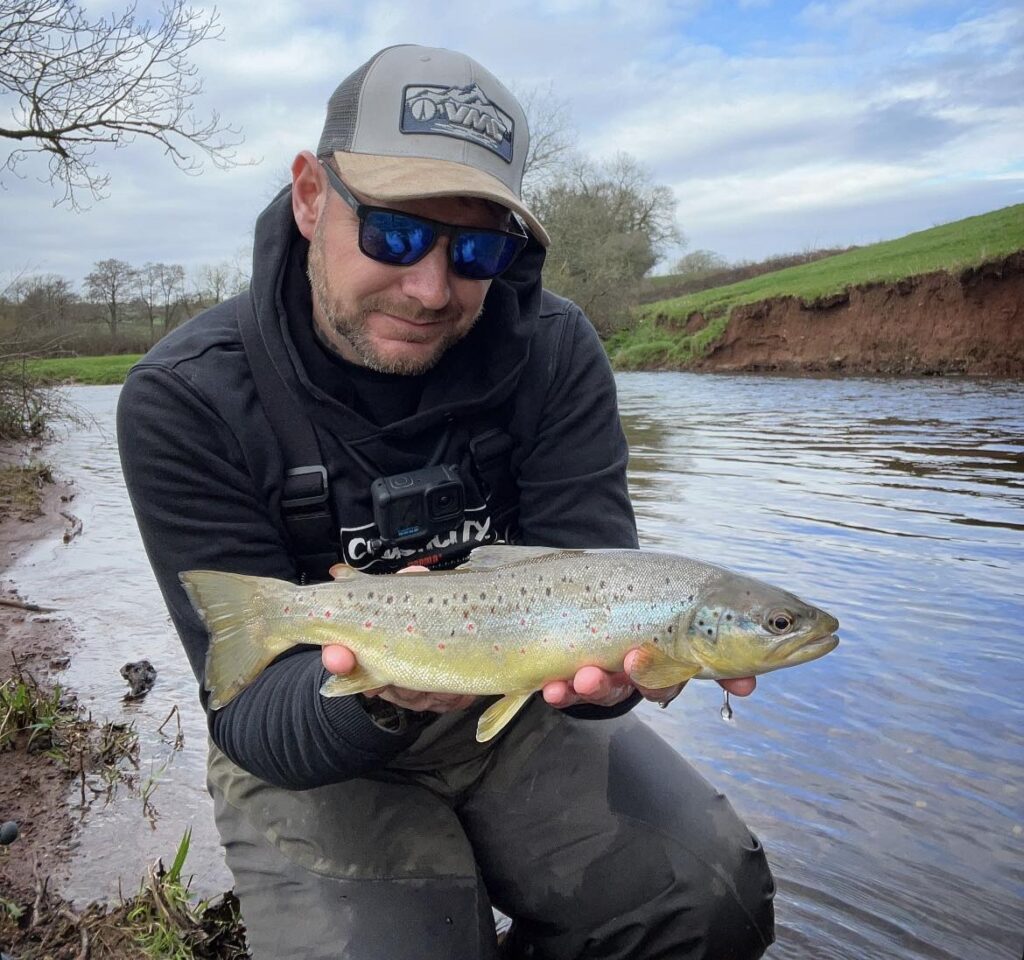
A single well-earned wild brown trout from a Welsh river in March or early April can feel like a real achievement.
Most people release wild trout nowadays and take satisfaction in doing so, while practicing good fish care.
After a long winter wild trout offer almost no food value anyway.
Final Thoughts
Early season trout fishing in Wales rewards patience, observation and adaptability.
Fish a little deeper, move a little slower, and time your outings around the warmest part of the day.
With the right approach, rivers like the Usk, Wye, Dee, Upper Teifi and Clywd – plus their many tributaries – can produce superb sport from the very first weeks of the season.
‘Pob Lwc’ and enjoy the start of another fantastic trout season in Wales.
Seasons:
3rd of March marks the opening of the fishing season on many* of our celebrated rivers, offering fresh opportunities to cast a line at some of the best wild brown trout in the UK.
*All West Wales’ rivers open 1st April, other than the Teifi above Lampeter Bridge, which opens on the 3rd March. Upper Severn opens on 18th March for trout fishing.
A freshwater rod licence is required as well as permission or a day ticket from the owner of the fishing rights.
Article Words: Fishing In Wales. Images: Ceri Thomas & Charlie Corkrum