Spring trouting on the Teifi
Ceri Thomas takes a closer look at one of West Wales most Iconic rivers – The Teifi. A river that you can trout fish 20 miles of for just £10 a day!
The famous Teifi is often said to be the ‘Queen of Welsh rivers’, a majestic watercourse which for the most part of its 76 mile course flows through the lush pastoral landscapes of Ceredigion and Carmarthenshire. It, along with the Towy, is the longest river flowing entirely in Wales.
Rising in the barren moonscape of the Cambrian mountains at the glacial llyn Teifi, the river’s rocky and fast flowing origin soon gives way to a meandering, lowland course from Tregaron downstream, with rich beds of jewel-green ranunculus weed swaying in the current adding to the charm.
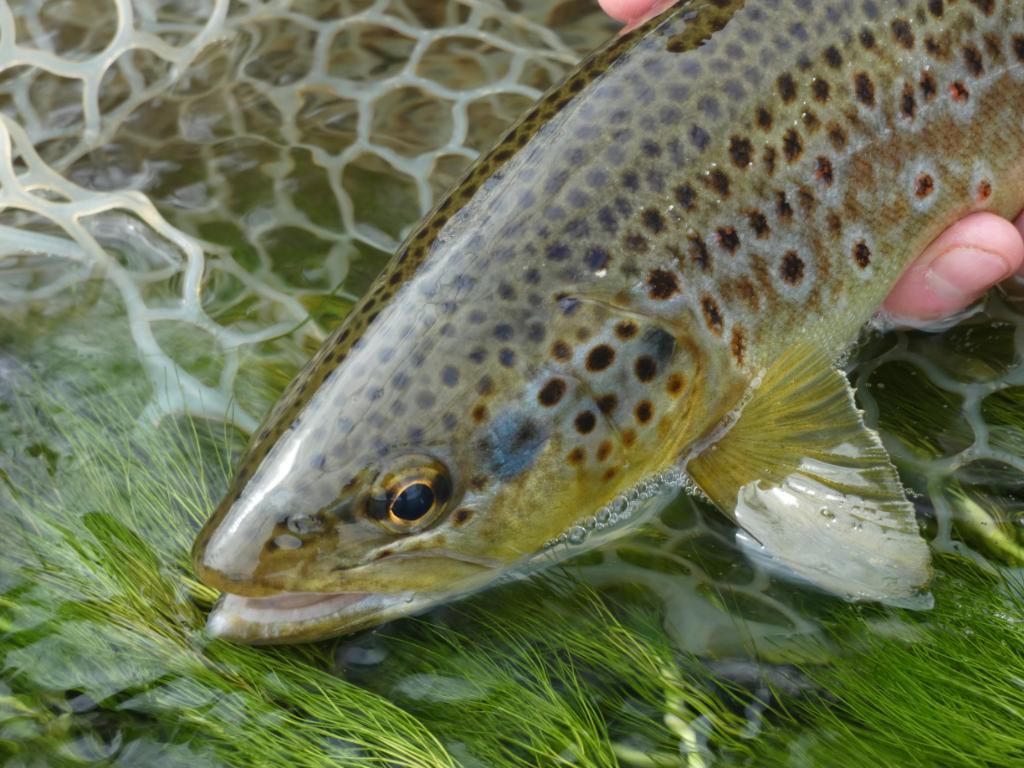
A history of trout fishing on the Teifi
From an angling perspective the Teifi is well known for its salmon and sea trout (sewin), but the river was also once renowned for its wild brown trout fishing, as championed by angling heavyweights such as Oliver Kite and Peter O’Reilly in the 1960’s, with the river drawing anglers from all over the UK looking to experience its prolific spring fly hatches.
Sadly, in the 1980’s the trout fishing declined and the river went through a troubled time for its fish and invertebrate populations. Cypermethrin based sheep dip came into use, a highly toxic insecticide that reduced invertebrate life drastically, rendering the main stem food sources extremely scarce, while acid rain threw a sucker punch in the headwater and upland tributaries, reducing aquatic life and insect diversity even further.
This food famine perhaps provided a stimulus for the resident brown trout to migrate to the sea – the Teifi’s sewin population increased at this time, overtaking salmon as the star attraction.
With our electricity needs eventually switching from coal burning, the threat of acid rain receded, and new EU farming rules banning Cypermethrin came in around 2010, allowing fly life to become well established again on the main river.
A period of recovery followed the sheep dip ban and the trout fishing began to improve year on year, mirroring the increase in insect life. Sadly this was stalled somewhat in December 2016 by a tragic pollution incident where an anaerobic digester destroyed several miles of the main river in the Tregaron area, thankfully this was not a total wipe out and many mature fish survived since they were either up-river or in tributaries spawning.
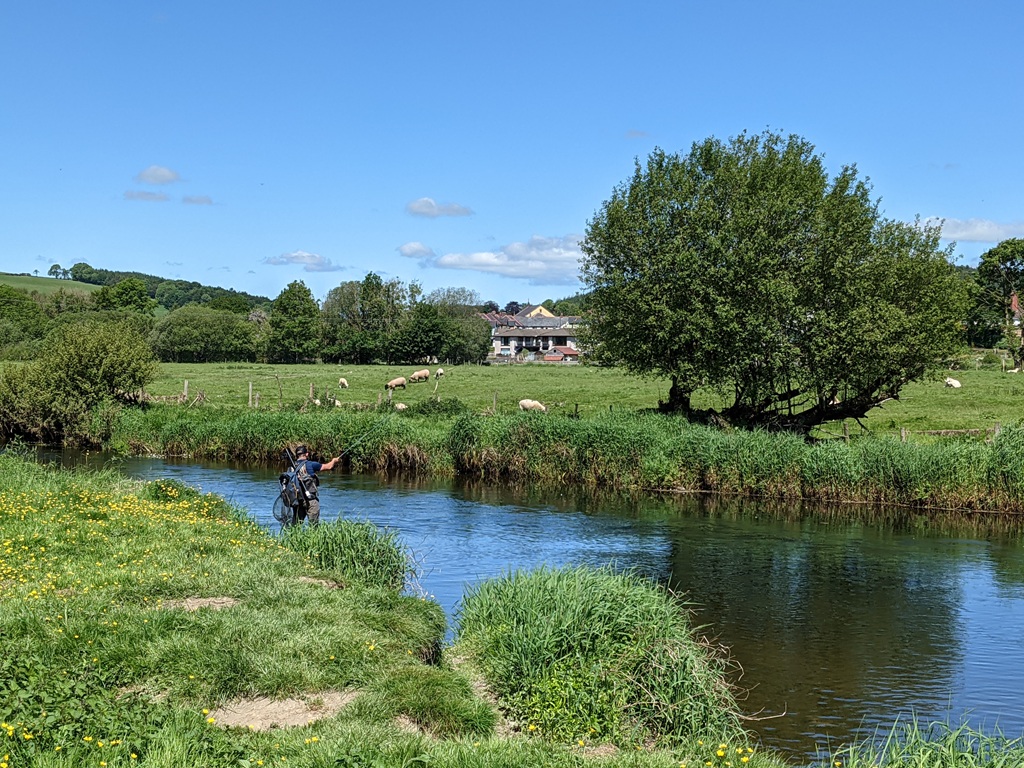
Teifi trout are back!
Since the major pollution incident a decade ago the fishing has bounced back very strongly for brown trout, making the river a worthwhile prospect for locals and visiting anglers alike.
Completely wild fish are now being caught on a regular basis, with some up to 20 inches and over 3lb in weight. Almost a return to the glory days of the 1960’s.
Indeed, It can be said that the Teifi trout fishing can now rival that of the rivers of south and mid Wales such as the Usk, Taff, Severn and upper Wye, and deservedly needs to be recognised as a brown trout angling destination.
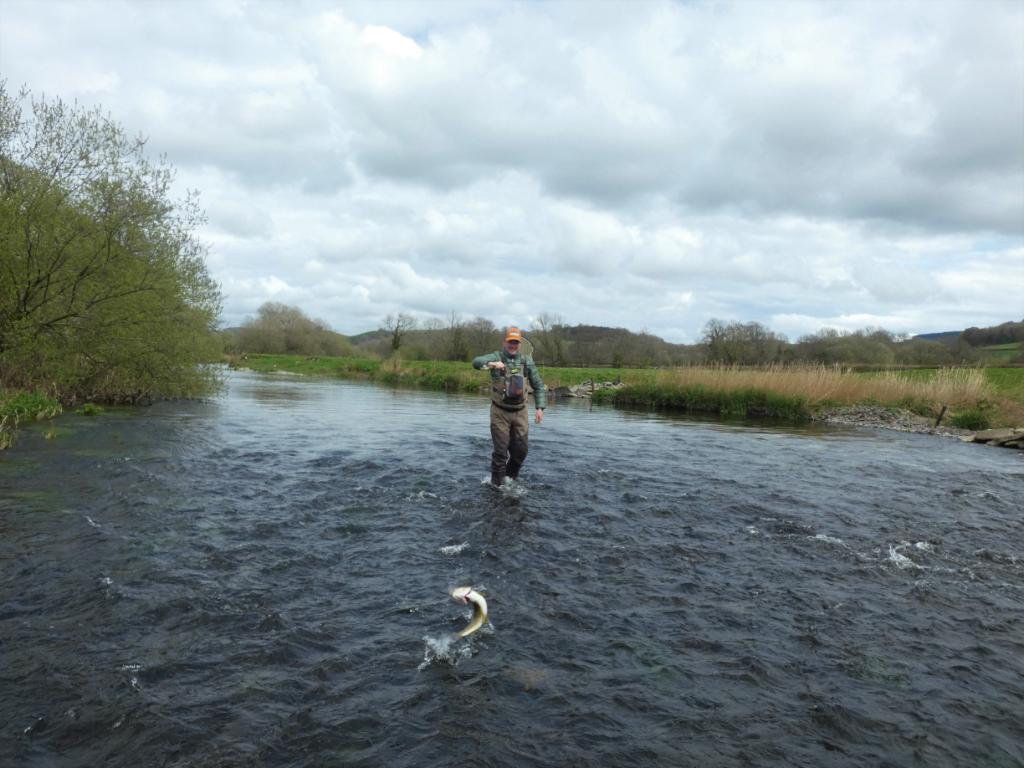
Grayling in the Teifi – Origins and potential
Surprisingly for a West Wales river the Teifi has a grayling population. Which are also on the up. Once exceedingly rare, they have existed in the river for a very long time.
The most common and accepted story of their introduction is that they were placed in two small ponds at Falcondale by Major C. Hartford. The fish had arrived in barrels by train in 1930. They escaped into the River Teifi near Lampeter, but never spread far and were always localised to just a few miles at Llanybydder.
There is plentiful evidence however of their existence prior, certainly into the 19th century, as revealed by recent National Library of Wales searches of digitised content.
The Carmarthen Journal in September 1916 states; “Dr Bankes Price and Mr D Roberts were granted permission to fish for grayling in the Teifi for experimental purposes”.
The Welsh Gazette in July 1902; “The season was an average one for trout and grayling, eels were very plentiful as usual and other fresh-water fish were about the average”.
Carmarthen Journal in October 1892; “There are curious tales told about fishermen and their sport…Mr S D Jones a short time ago…bought up a trout, a grayling, and a sam’et (smolt) at a single throw”.
And in The Carmarthen Journal in May 1889; “…Lampeter, being situated on the banks of the Teifi, renowned for its salmon, grayling, and trout, afforded excellent treat to fishermen”.
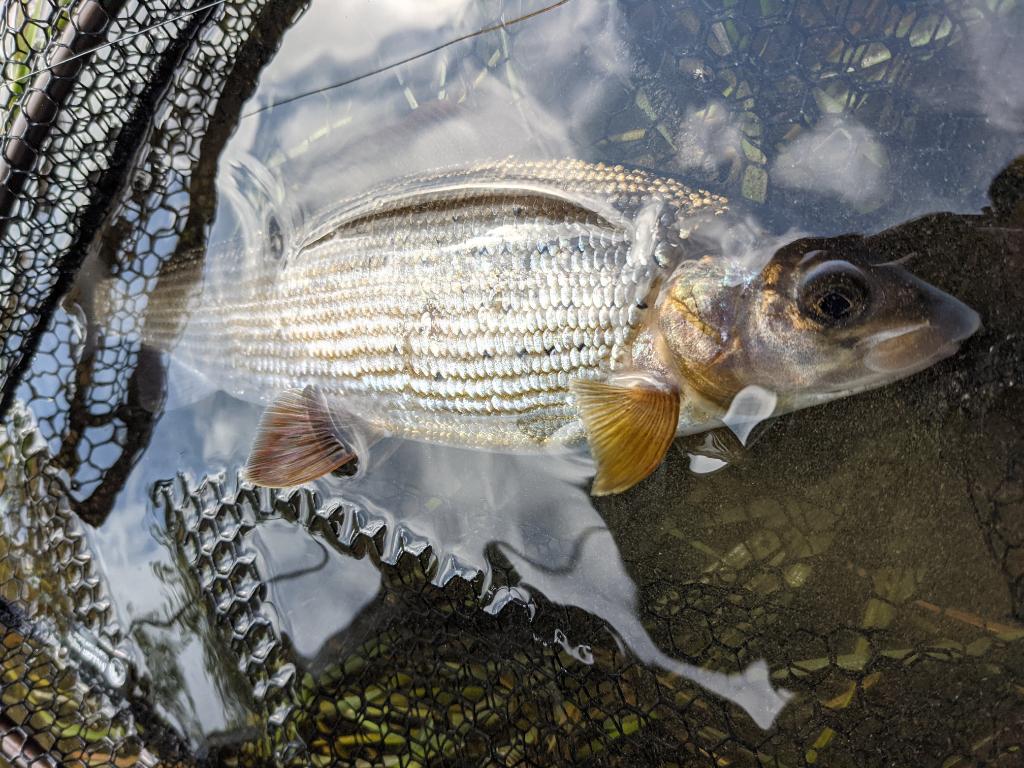
Whatever their origin, the Teifi’s grayling have recently experienced a population increase, again most likely due to the additional food supply in the river and also perhaps due to an ecological niche being left by diminished numbers of sea trout and salmon parr, which the grayling have started to occupy.
Their range has increased dramatically in the past few years, and they can now be found from Lampeter downstream to Newcastle Emlyn, a swathe of nearly 30 miles.
Full grayling potential is still an unknown quantity, as they cannot be targeted until June the 16th, with no winter ‘coarse’ fishing permitted. In the future the Teifi could possibly become a grayling river of some note. The habitat and living space is certainly there for them.
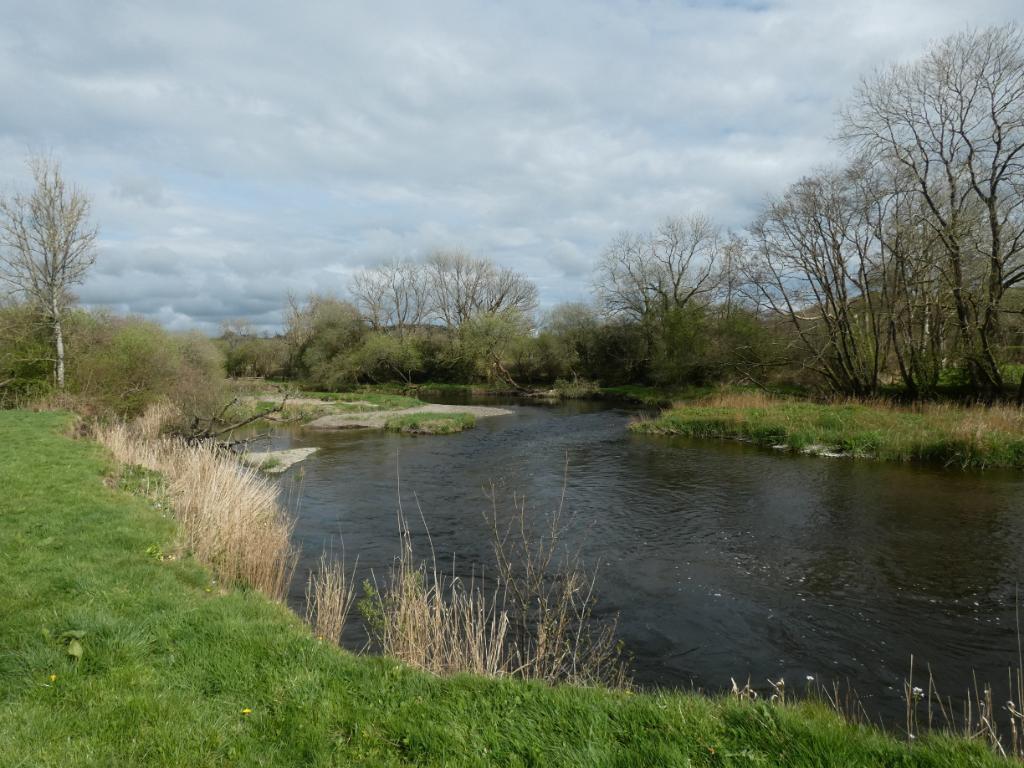
Trout fishing – Where to try
There are several angling clubs offering access to the river, including Tregaron in the upper reaches and the Teifi Trout Association on the lower stretches. Both offer value for money options and a ton of water.
Of all of the clubs, Llandysul Angling Association perhaps presents the cream of the trout fishing, being situated in the prime middle reaches of the river. The club has a huge range of beats spread out over 30 miles of river from just above Newcastle-Emlyn to Cellan, situated upstream of Lampeter town.
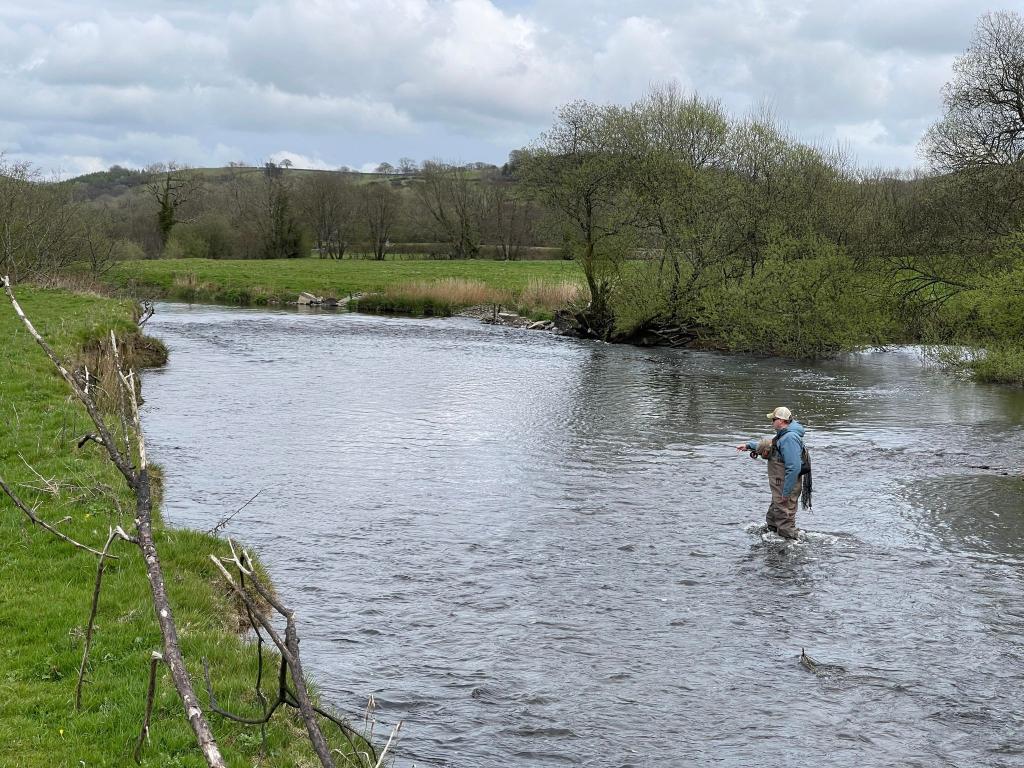
Over the past few years, I have fished the Llandysul AA water on several occasions, and I have to say the journey is well worth it, with some stunning stretches of water available at a bargain price – just £10 a day for trout fishing across 10 beats, or £60 for a full ‘trout only’ season (prices as of 2026). Junior members may fish for only £2 a year. In this day and age, that really is cheap fishing!
Please note: The trout fishing only ticket does not cover the whole club waters, but will cover approximately 20 miles of it – a huge area to go at. Check the club website rules for full details.
You won’t find rubbish on the banks of the Llandysul beats, they are well maintained by the local club with excellent access paths and parking spots. They also do some great things with the locally community, particularly with junior members and instructional learning to fish days.
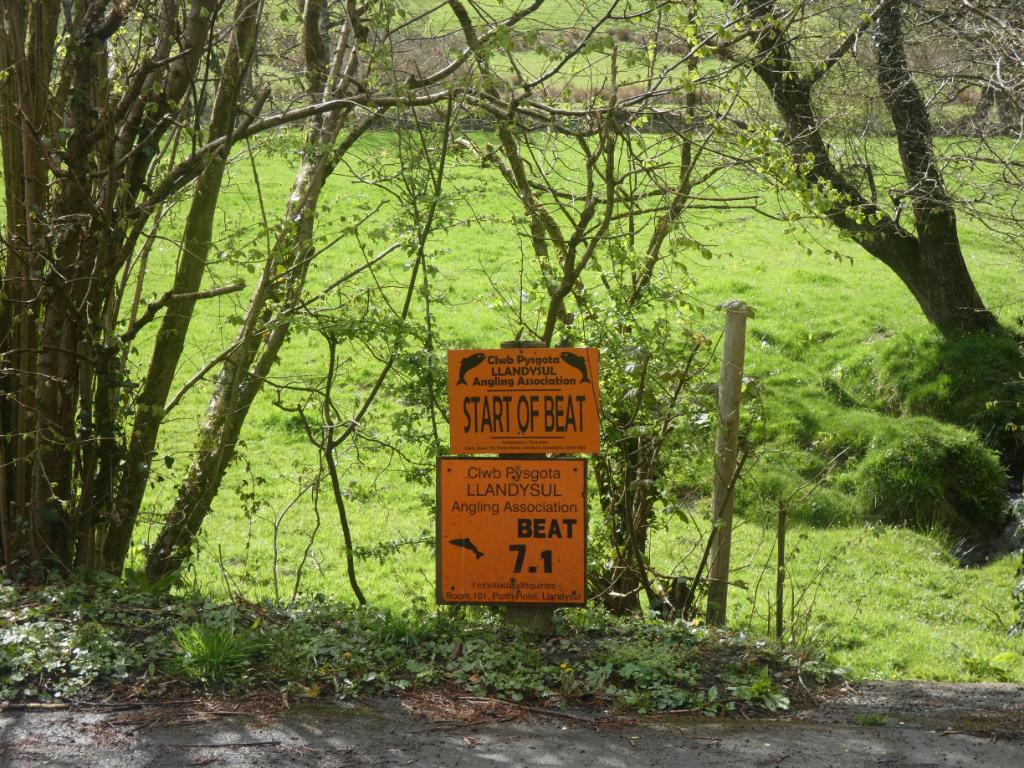
Importantly, the club maintains a fantastic website, which features some very useful and incredibly detailed beat maps. In fact, it’s one of the best angling club websites that I’ve used.
Good trout fishing can be found on many of the upper Llandysul AA Teifi beats, but with nearly 30 miles to choose from, local knowledge can be very handy indeed. The club is always very happy to help out, so please get in touch with them to find out which areas are fishing best.
As an added bonus, this part of Wales is blessed with ideal locations for a family break, conveniently located very close to the river, therefore allowing you to fit in a few trout sessions alongside a family holiday – or even to take the family fishing with you!
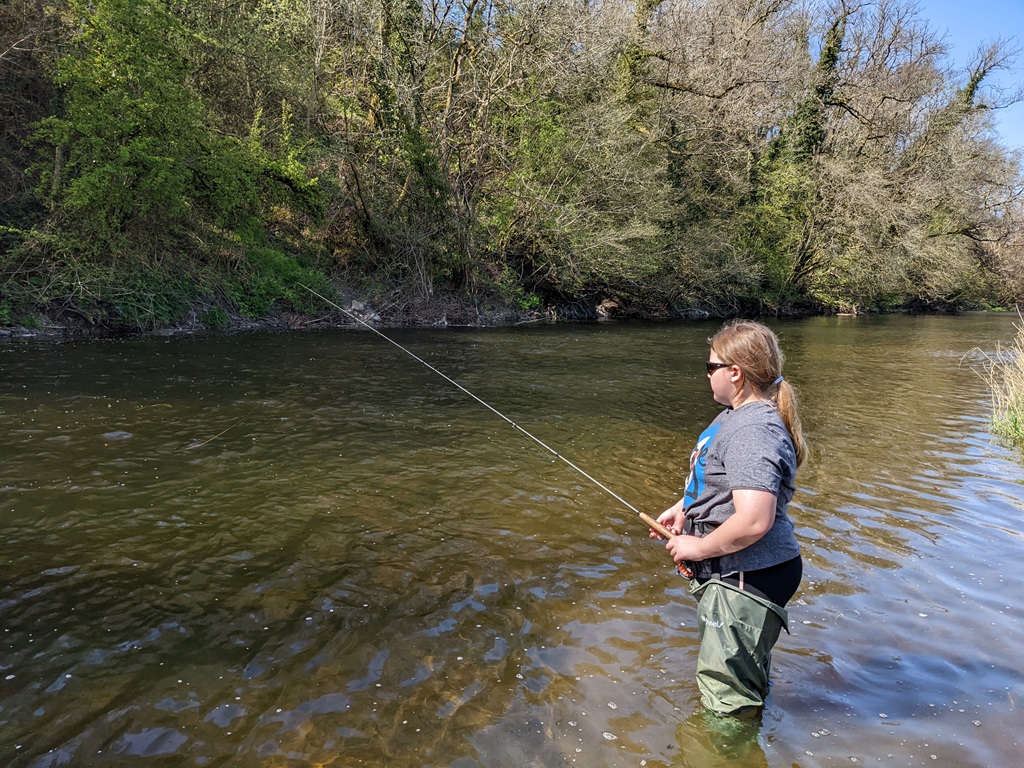
Spring getaways do allow a flexible approach – with a few hours spent here and there in the mid-afternoons, always the best time for early season dry fly fishing.
Dry springs and summers have seemingly become an ever-common climatic trend; however even in droughts the middle Teifi keeps its levels up well, being fed by innumerable small streams and brooks rather than major tributaries.
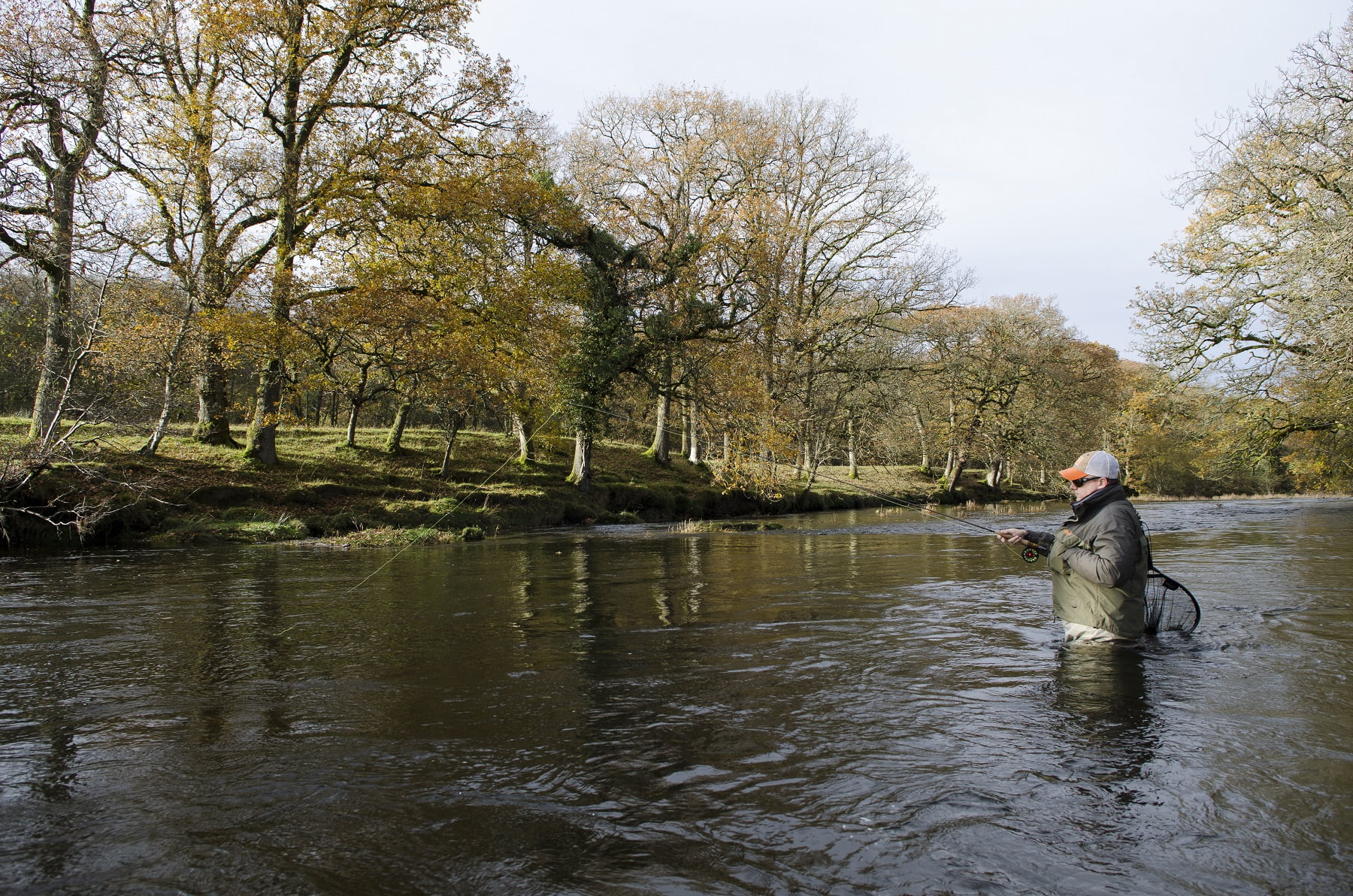
This lack of larger tributaries also makes the Llandysul club waters a manageable and less intimidating size over most of its course, rarely being over 40 yards in width and in most parts 20 to 30 yards.
Local angler and guide Steffan Jones knows the river like the back of his hand, and if you are looking for advice or a day on the water I’d highly recommend you get in touch with him.
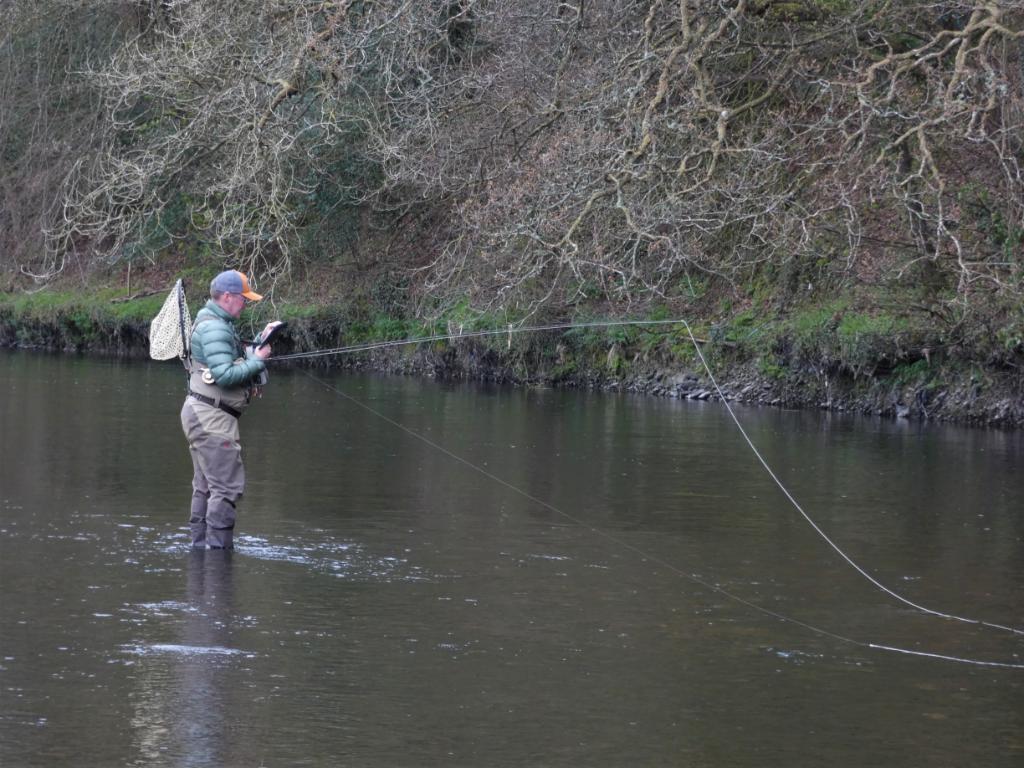
I recall a warm spring day spent fishing with Steffan on one of the prime trout beats near Llanybydder a couple of years ago. This was an impressive beat of nearly 1.5 miles in length. It had it all – lovely dry fly flats, weedy glides and steady pools that were simply perfect for trout and grayling.
We started the day off with plenty of moderately sized fish from 8 to 11 inches on nymphs and dry flies fished blind, with numerous small parr and sewin smolts showing, indicating a healthy, balanced population.
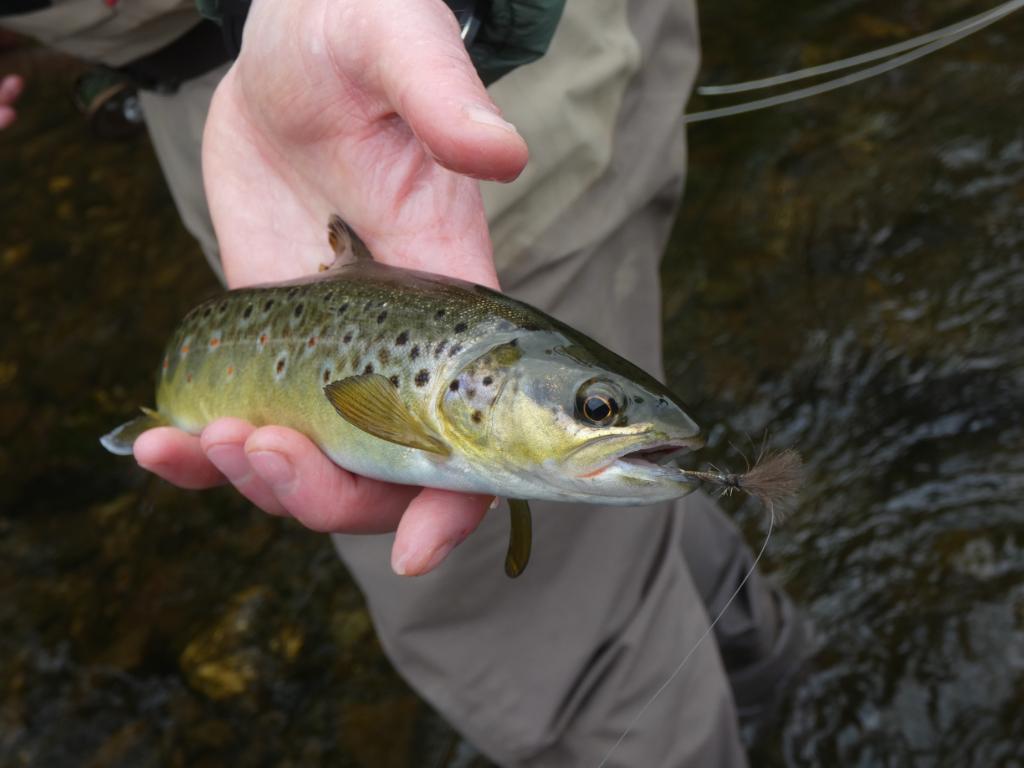
There are not that many rivers in south West Wales with as many juvenile salmonids as the Teifi, but here perhaps thanks to abundant cover from weed, bank structure and tree lined areas they are literally everywhere.
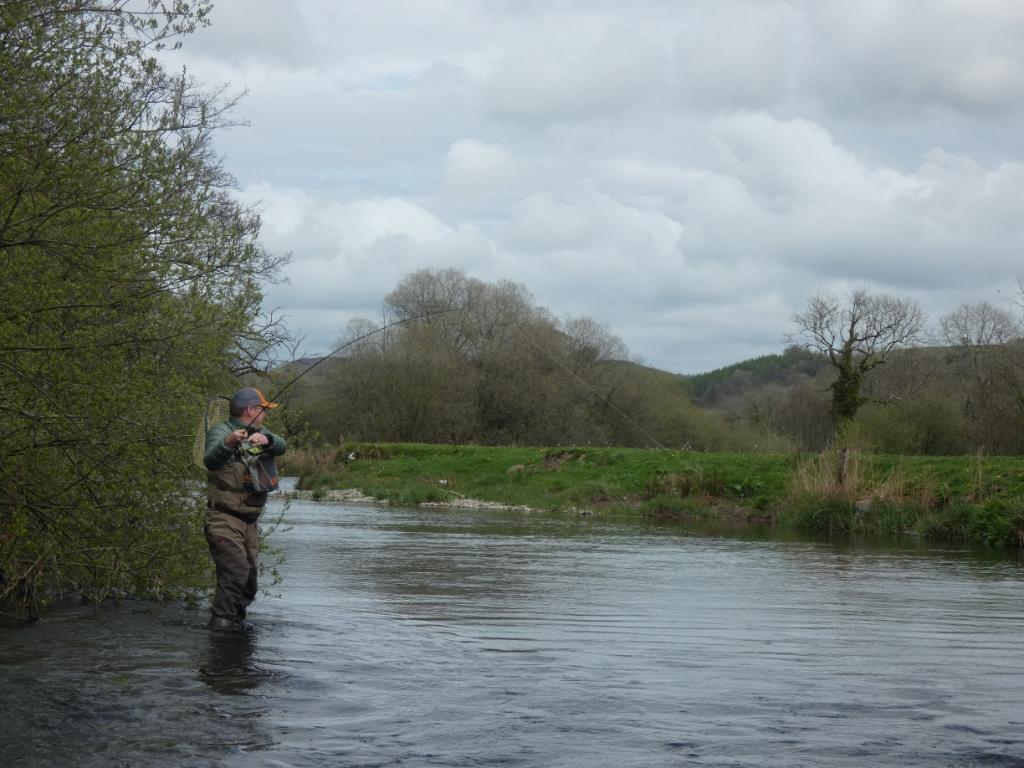
Fly life and rising fish
Being late April we were expecting to see Grannom, LDO’s, early Brook Duns and Olive Uprights – and Steffan had prepared a selection of flies to cover all eventualities. As hoped for, a smattering of these species soon appeared, drawing some nice fish to the surface on secluded flats and glides.
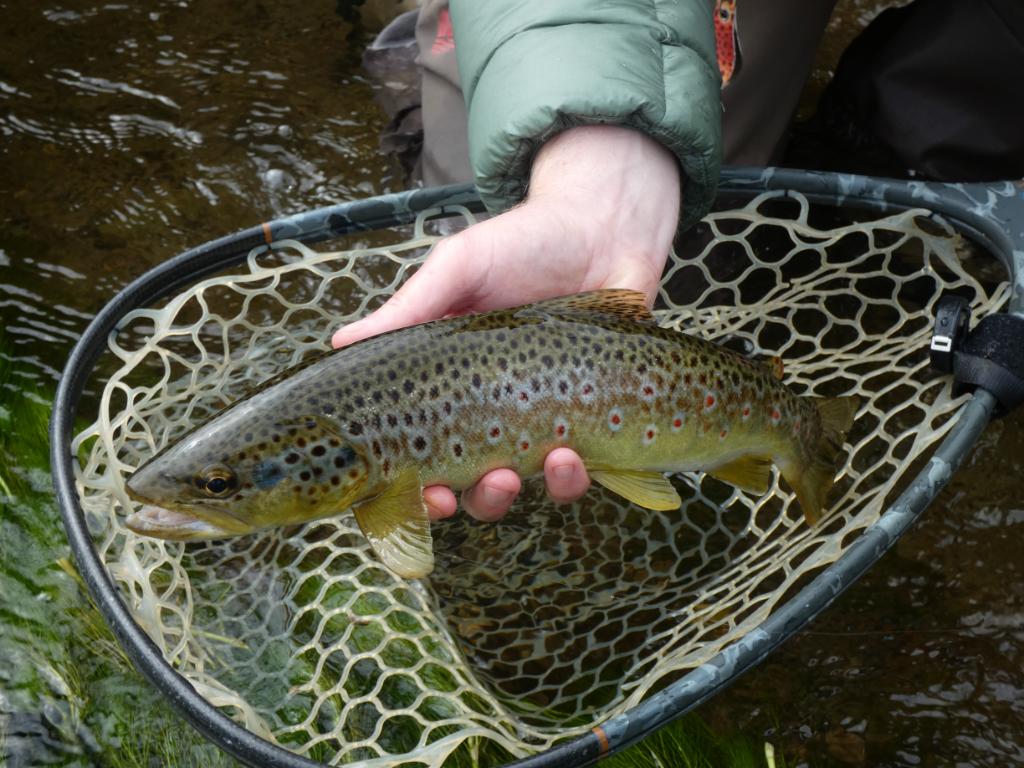
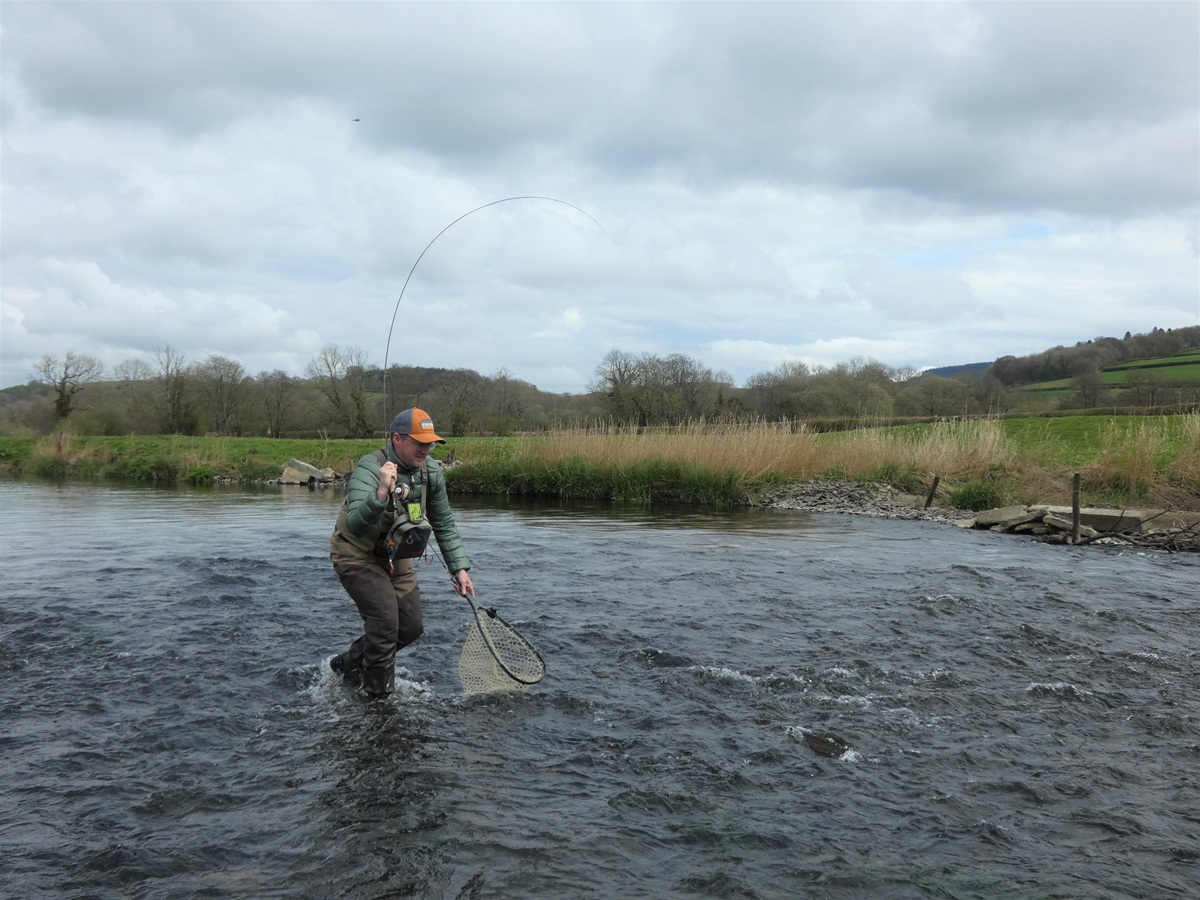
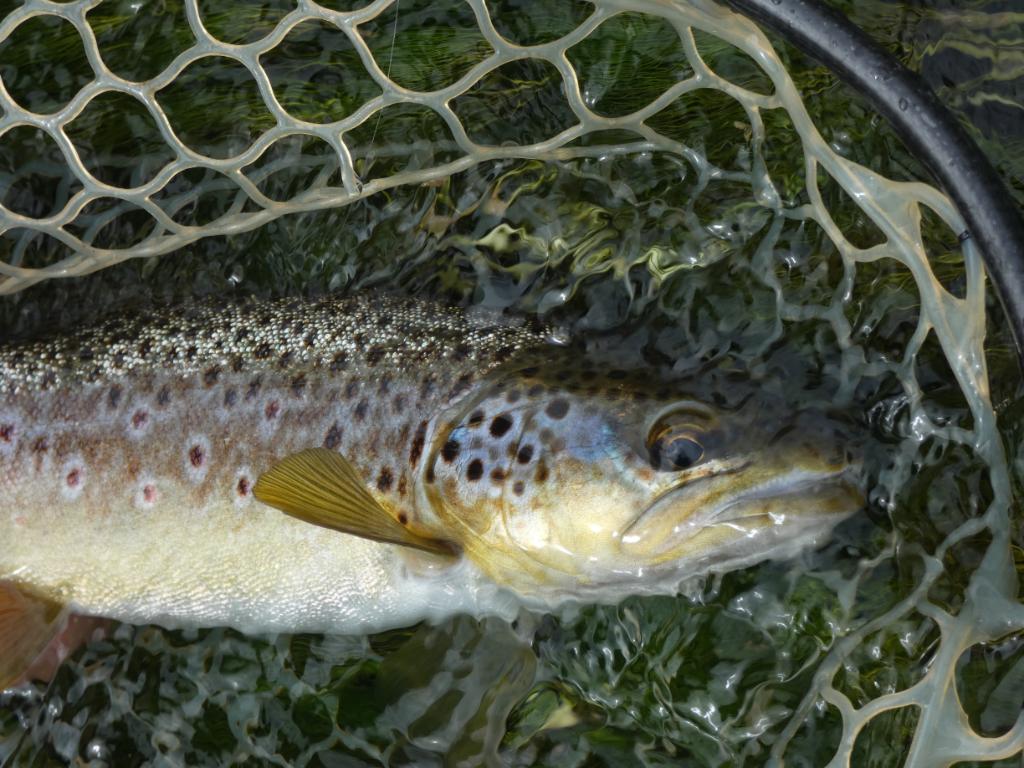
As the wind dropped these better fish began to rise confidently, sipping spent Grannom and olive uprights, allowing us to pick off some truly lovely wild trout. These ranged between 14 and 16 inches in length, displaying a wide range of colouration and markings. The dry fly fishing extended well into the afternoon in bucolic, unspoilt countryside. Simply magical.
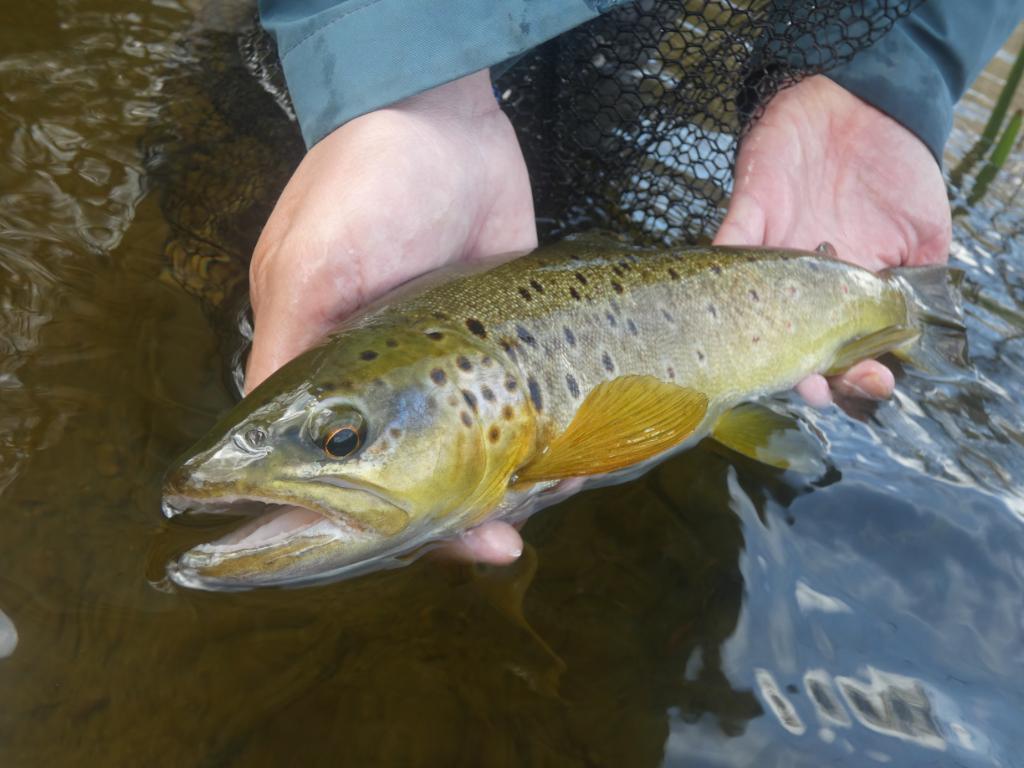
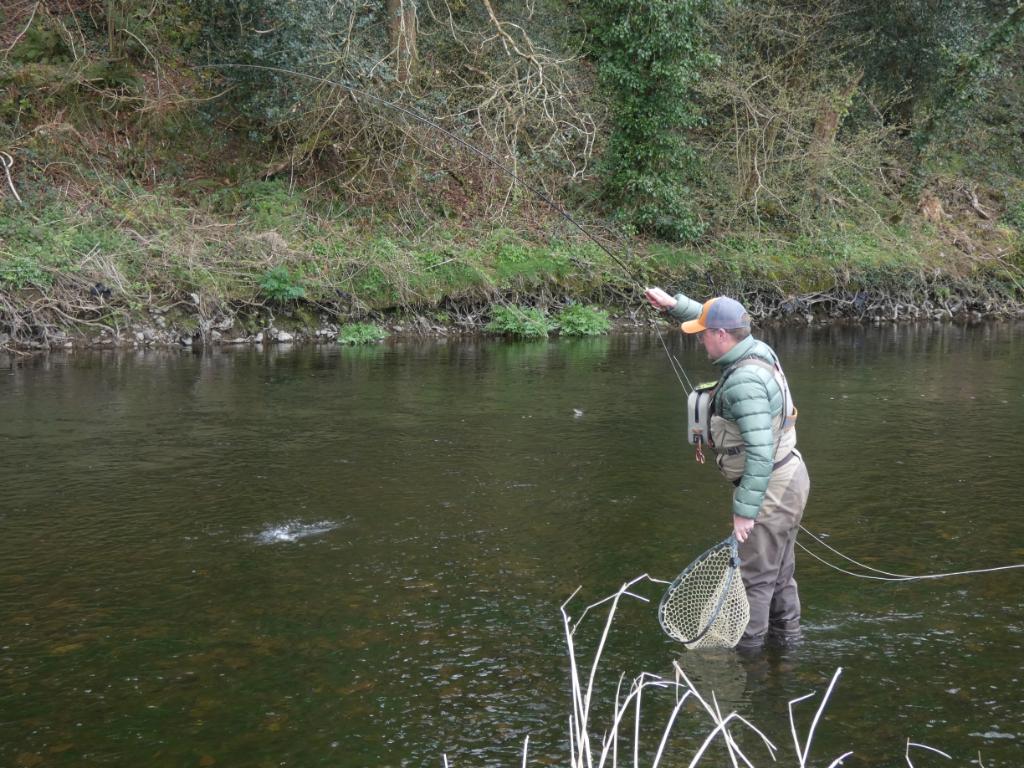
As part of the same visit I also explored the Teifi near the village of Maesycrugiau, where I was rewarded with plenty of trout, often on dries. The beats here had super dry fly flats and excellent trout habitat throughout, with many runs and pools that simply screamed fish.
Another productive stretch was in the Lampeter area, where you might think you were fishing on an English chalk stream rather than on a Welsh river. It is here that some seriously large (and cagey!) trout were sighted between channels in the lush ranunculus beds.
Trout fishing on the Teifi comes highly recommended – if you are looking for a different option to your local Welsh river or planning for a short angling break i’d urge you to give it a try; you won’t be disappointed.
Fishery Factfile
Llandysul Angling Association
Website: www.teififishing.com
Email: LlandysulAngling@gmail.com
Tickets are available from local outlets as shown on the website. Online ticket options are available via FishPal: www.fishpal.com/wales/welshrivers/llandysulanglingassociation
Trout season runs from 1st April to 30th September below Lampeter bridge, above it the season start is 3rd March.
Fishing the Deepest Lake in Wales - VIDEO
We visit the deepest lake in Wales – Llyn Cowlyd – a wild and remote lake in the Carneddau mountains…
Read More
Autumn Prospects: Fishing in Wales
After an exceptionally hot and very dry summer, autumn is finally beginning to make its presence felt across Wales.
Read More
Coarse Fishing at Llandegfedd Reservoir VIDEO - Big Water Feeder Fishing Tips & Tactics
We join Dave Healey on Llandegfedd Reservoir for a day on the perch, roach, bream and hybrids that are…
Read More